
Garbage disposal · Cedar City, Utah
Garbage disposal repair in Cedar City, UT: humming and jammed units, leak sources, safe resets and when to replace
A disposal fails in a few predictable ways: it hums and does nothing, it will not run at all, or it leaks under the sink. Each one has a safe first step, and one thing you should never do, which is reach into the unit.
Disposal not working?
- NEVER
- Put your hand in the disposal, even when it is off
- HUMMING
- Power off at the switch before you try anything
- LEAKING
- Put a bucket under it and note where the water starts
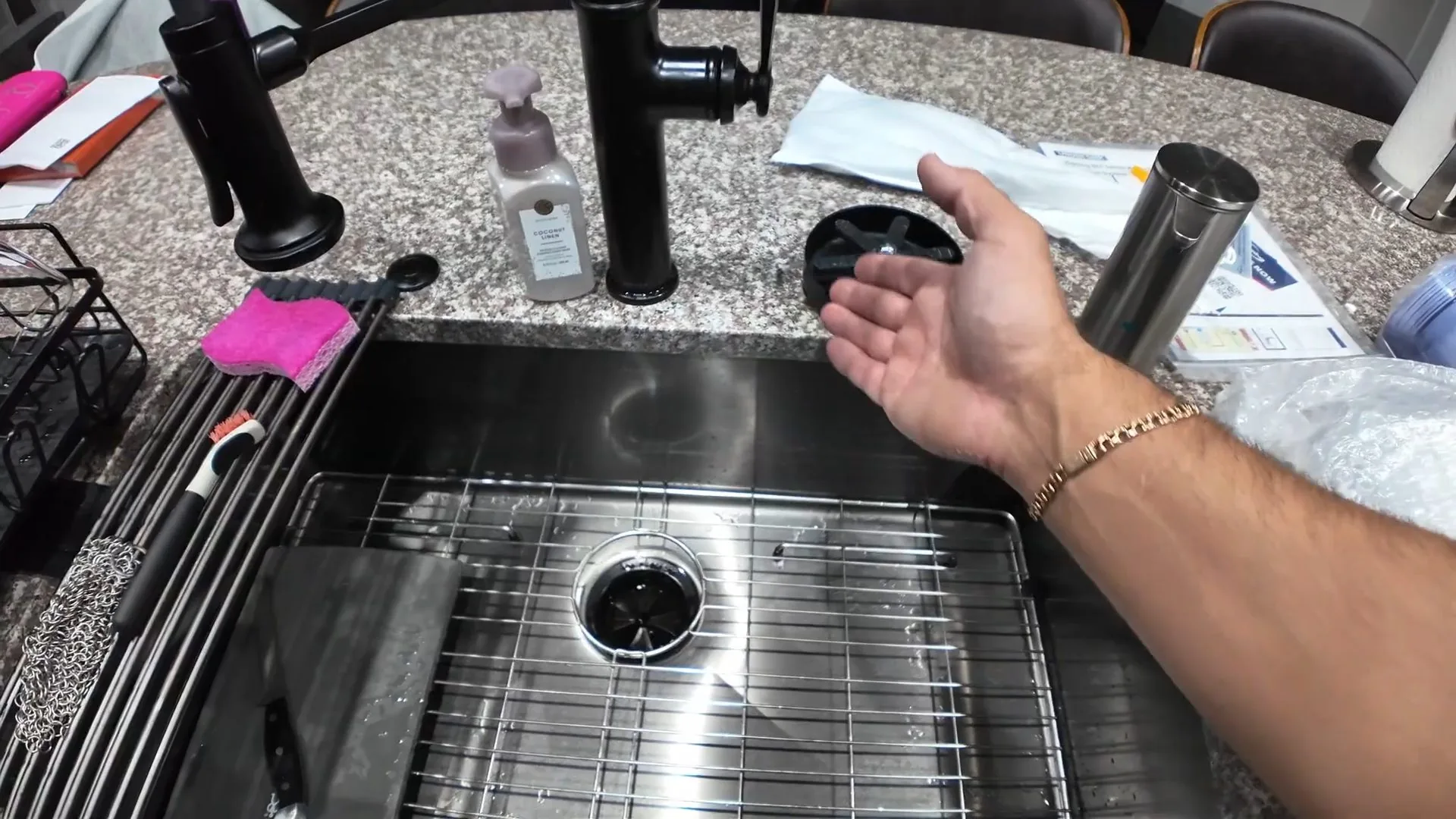
Match the symptom: humming, silent, slow or leaking
| What you notice | What it usually means | Safe first step |
|---|---|---|
| Hums but the blades do not turn | The blades are jammed | Switch off, then use the hex key socket at the bottom to turn them loose |
| Silent, no hum | The unit tripped its reset button or has no power | Switch off, press the red reset button on the bottom, then try again |
| Runs but drains slowly | A partial clog in the drain line past the disposal | See the drain section below |
| Water under the sink | A leak at a seal, the sink flange or the drain connection | See the leak section below |
| Loud grinding or rattling | A foreign object, such as a utensil or bottle cap | Switch off and look with a flashlight, using tongs only |
| Foul smell | Food residue in the grind chamber or drain | Clean as described below |
Never put a hand into a disposal, even when it is off. Use tongs or pliers to remove an object, and switch off the power at the wall switch and, if possible, the breaker first.
Freeing a jammed disposal: the safe way
- Switch off the disposal at the wall switch. If you can, turn off the breaker as well.
- Look into the drain with a flashlight and remove anything visible with tongs.
- Find the hex-shaped socket at the center of the underside of the unit.
- Fit the hex key that came with the disposal, or a 1/4 inch Allen key, and turn it back and forth until it moves freely.
- Press the red reset button on the bottom, restore power and run cold water, then test.
If the unit jams again, or the motor hums without turning after the blades move again, stop. The motor or its bearings may be failing, and repeated resets will not fix that.
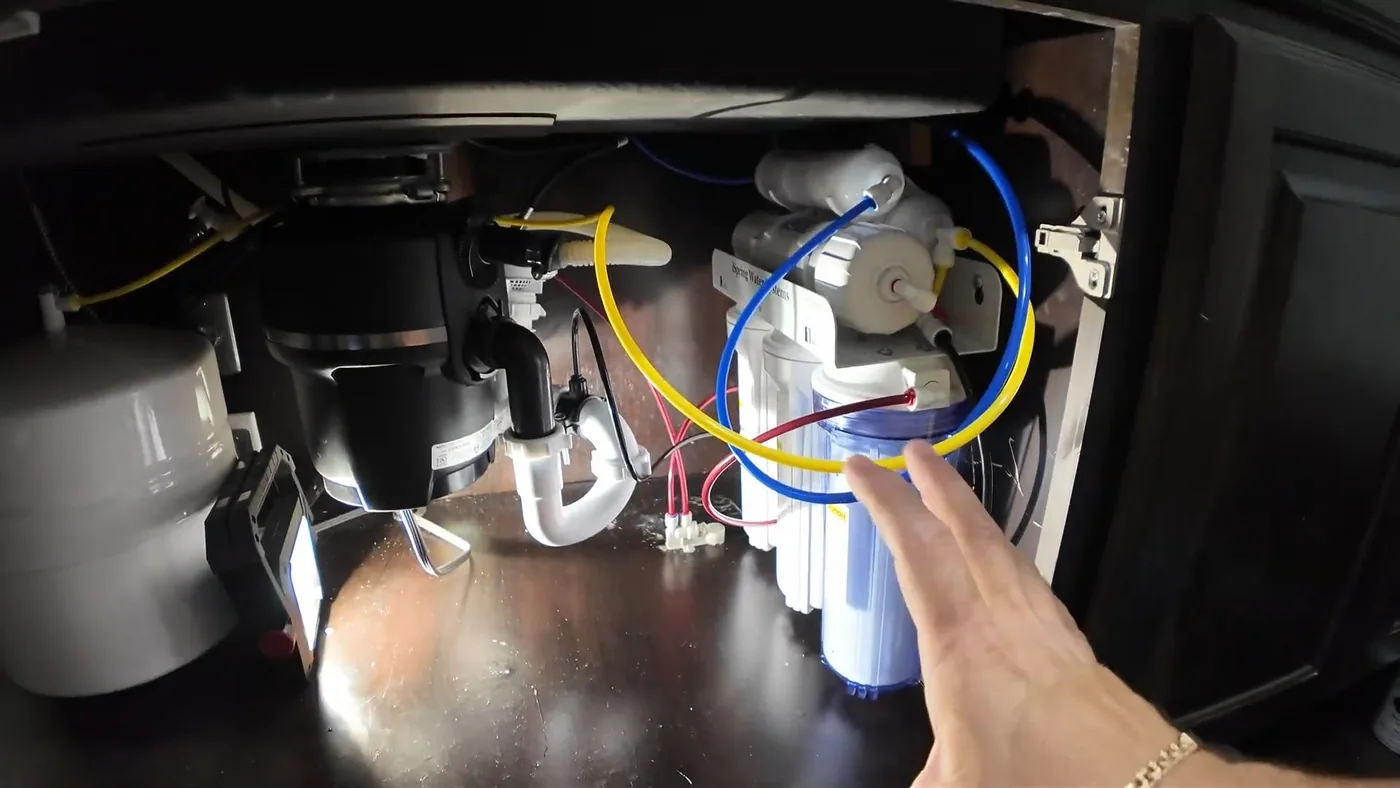
A leaking disposal: where the water comes from
Dry the area, then run water and watch where the first drop forms. Leak location tells you what can be fixed.
| Where it leaks | Usual cause | Repair or replace |
|---|---|---|
| Top, around the sink flange | The mounting seal or putty has failed | Reseat the flange, often a repair |
| Side, at the drain pipe connection | A loose or worn gasket | Usually a repair |
| Dishwasher inlet | A loose hose clamp or cracked fitting | Usually a repair |
| Bottom or body of the unit | The housing has corroded or cracked | Replace the disposal |
A leak from the body of the unit is the end of that disposal. If you are not sure whether the water is coming from the disposal or a supply line, see finding the source of a leak.
Disposal leaking or dead?
Call and describe what it does when you flip the switch. A plumber can tell you whether to repair or replace it.
Slow draining and odors
A disposal that runs but does not drain may have a clog past the unit, in the trap or the line beyond. Do not run the disposal against a blocked line. If the kitchen drain stays slow, the problem is likely in the pipe, which is covered under kitchen drain cleaning.
- Run cold water for 15 seconds after every use.
- Grind a handful of ice and a citrus peel to scrub the chamber.
- Avoid grease, coffee grounds, fibrous scraps and large amounts of starch.
- Skip chemical drain cleaners, which can damage seals and are hazardous when someone later works on the pipe.
Repair or replace: what decides it
- Is the housing leaking? That means replacement.
- Is the unit old and noisy, and has it jammed more than once? A new one may cost less than repeated visits.
- Is the motor humming without turning after the blades move again? That points to a failed motor.
- Does the sink have room for the replacement, and does the mount match? Mounting styles differ.
- Is the household using the disposal heavily? A larger motor may suit it.
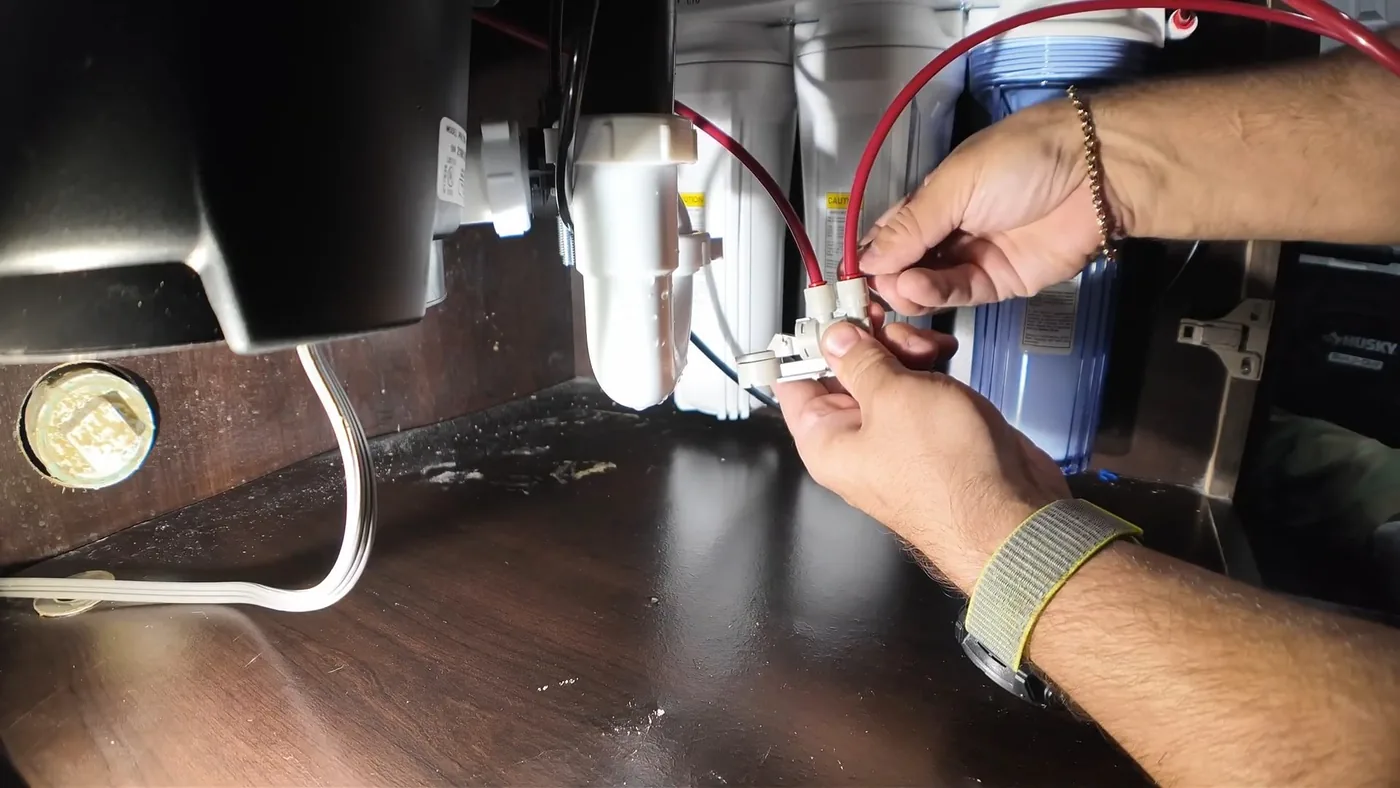
What a disposal installation includes
- Removing the old unit and its mounting ring
- A new sink flange seal, drain connection and dishwasher inlet if the dishwasher is connected
- Wiring or a plug connection to the switched outlet, with power off while the work is done
- A leak test with water running before the job is finished
- Any electrical work, listed as its own line
- Hauling away the old unit
Ask whether the dishwasher knockout plug has been removed. A disposal installed with the plug left in will cause the dishwasher to back up.
What goes in a disposal, and what does not
| Fine in small amounts | Keep out |
|---|---|
| Soft food scraps, rinsed plate leftovers | Grease, oil and fat, which coat the pipe and harden |
| Small bits of fruit and vegetable trimmings | Coffee grounds in quantity, which pack into sludge |
| Ice cubes now and then to scrub the chamber | Bones, fruit pits and shells |
| Citrus peel in small pieces | Fibrous stalks, corn husks, onion skins and celery |
| Cooked pasta or rice in a small handful | Starch in quantity, which swells and gums up the trap |
Always run cold water while the unit is running and for a few seconds after. Cold water keeps grease firm enough to be chopped and flushed. Hot water lets it melt and coat the pipe.
Choosing a replacement: motor size, feed type and noise
- Motor size: a household that disposes of a lot of food waste suits a larger motor. A light-use household does not need one.
- Feed type: continuous feed runs while the switch is on. Batch feed runs only with the stopper in place and is safer around children.
- Noise: insulation and a better mounting system lower the sound.
- Mounting: match the mounting ring to your sink flange, or plan to replace it.
- Dishwasher: tell the plumber if the dishwasher drains into the disposal.
If the sink also needs work, a plumber can combine the job with a faucet or sink repair to save a second visit.
Disposal trouble: act now or book it
Do not wait
- Water spreading under the sink or over the floor
- A burning smell or smoke from the unit
- Sparks, or a tripped breaker that trips again
- Sewage backing up from the sink
Jobs for a scheduled visit
- A disposal that hums but frees with the hex key
- A slow drip you have caught and mopped
- A noisy but working unit
- An upgrade to a larger or quieter model
Reset, replace and clean: disposal questions
My garbage disposal hums or jams. Can I reset it, and when should I replace it?
Switch it off, then loosen the blades with the hex key on the underside and press the red reset button. Never put a hand in. If it jams again, hums without turning or leaks from the body, it is usually time to replace it.
Why is my garbage disposal leaking from the bottom?
A leak from the bottom or body usually means the housing has corroded or cracked, and the unit needs replacing. Leaks from the top flange or the side connections are often repairable.
How do I stop my garbage disposal from smelling?
Run cold water after every use, grind a handful of ice and citrus peel, and keep grease and fibrous scraps out. If the smell persists, the drain line past the disposal may need cleaning.
What does a new garbage disposal need before it can be installed?
It needs a switched outlet or a hardwired connection, a sink with a disposal-sized drain opening and a drain line that handles ground waste. Ask the plumber to check these before choosing a model.
Kitchen and drain pages
Disposal humming, jammed or leaking?
Call and describe what it does when you flip the switch. You will talk to a plumber, not fill in a form.