
Tankless water heaters · Cedar City, Utah
Tankless water heaters in Cedar City, UT: gas line, venting, hard water and winter flow before you commit
A tankless heater can give you hot water without a tank to fill, but it is not a simple swap. Gas supply, venting, hard water and winter-cold inlet water all decide whether it works well in your house.
Thinking about tankless?
- GAS SUPPLY
- Find out what your gas line can deliver
- HARD WATER
- Plan for descaling from day one
- WINTER FLOW
- Ask how the unit performs in January
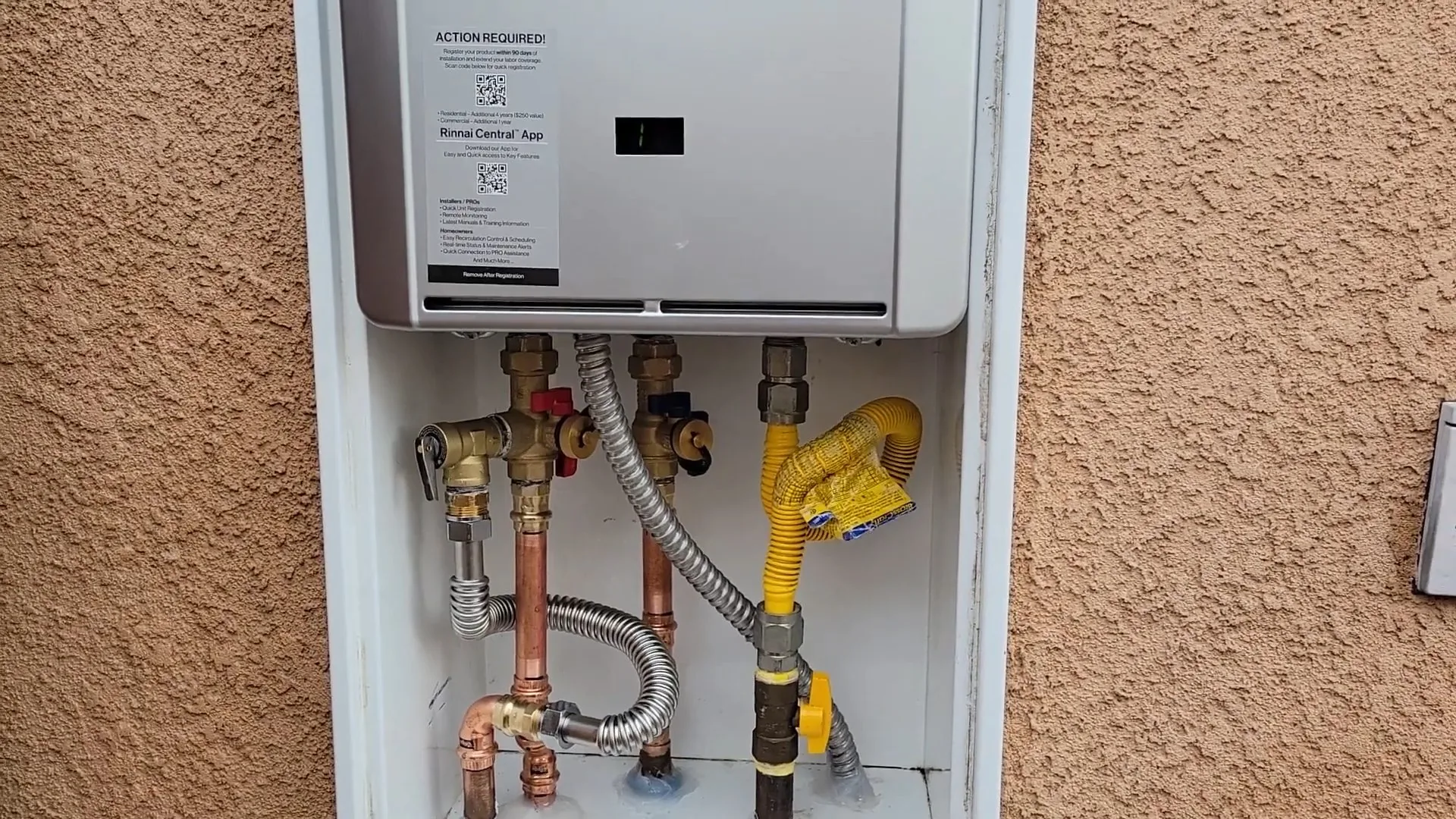
Is tankless right for your house? Four things decide it
| The question | Why it matters | What to ask |
|---|---|---|
| Can the gas line supply it? | Whole-house gas units draw far more gas than a tank | Ask for the unit’s gas demand and your meter and pipe capacity |
| Where does it vent? | Venting runs through a wall or roof and needs clearances | Ask for the vent path and materials in the quote |
| How much hot water do you use at once? | A unit has a flow limit that falls when incoming water is cold | Ask for the flow it delivers in winter, not just the rated maximum |
| How hard is your water? | Scale builds up inside the heat exchanger | Ask for a service plan and a descaling schedule |
If one of these four is a problem, it can often be solved. It should be solved before the unit goes on the wall, not afterward.
Whole-house, point-of-use and undersink units
| Unit | Best for | Limits |
|---|---|---|
| Whole-house gas | A family with several bathrooms and a gas supply that can handle it | Gas line upgrade, venting and cost of installation |
| Whole-house electric | Homes with no gas, or small households | Heavy electrical demand. Ask about panel and wire size. |
| Point-of-use | One bathroom or a far-off kitchen that waits too long for hot water | Serves one location, and the flow is limited |
| Undersink | A single sink where you want hot water close by | Small flow, and it needs a nearby outlet |
Small units solve a narrow problem well. They are not a replacement for a main heater when several fixtures run together.
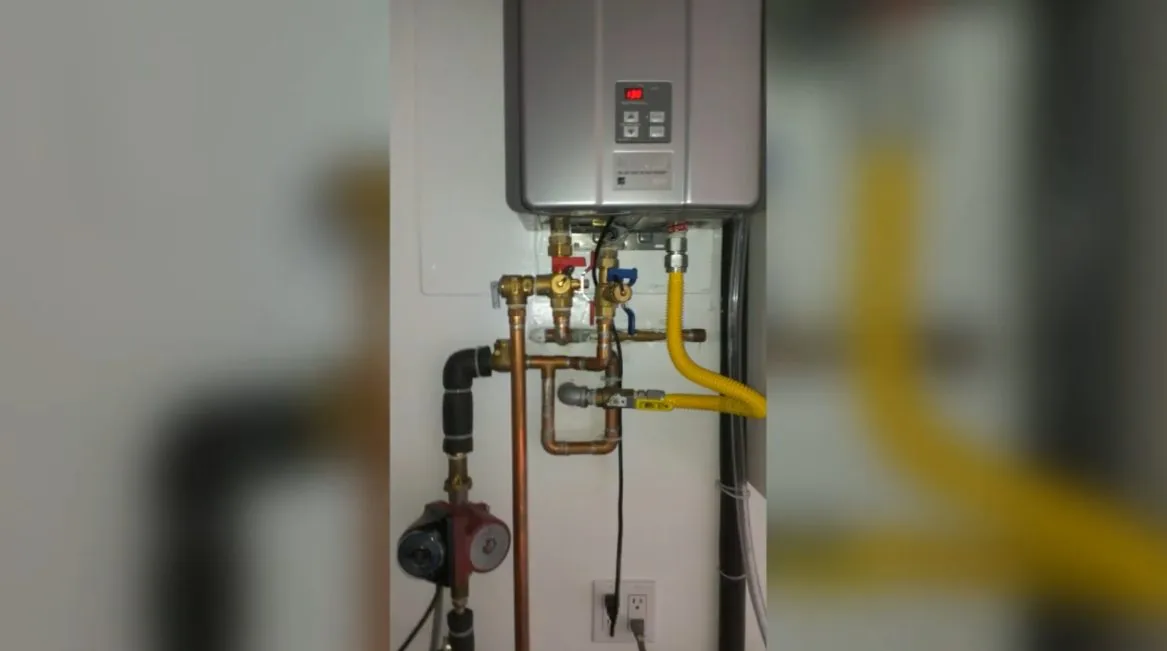
Gas line and venting: the part owners overlook
Most tank heaters run on a small gas line. A tankless unit may need a larger one, and sometimes a new run from the meter. That is plumbing work, and it is where quotes differ most.
- Ask for the unit’s gas input and whether the existing pipe can deliver it.
- Ask whether the gas meter needs to be checked with the utility. Details are on the gas line sizing and pressure testing page.
- Ask what the vent is made of, how long the run is and where it terminates.
- Ask whether a condensate drain is needed and where it goes.
Hard water and tankless: why upkeep is not optional
What hardness does to a heat exchanger
A USGS estimate based on Iron County samples puts hardness at about 13 grains per gallon, classed as very hard. That is a county estimate, not a reading from your tap.
Scale narrows the passages in a tankless unit and cuts flow and efficiency. Ask for service valves so the unit can be flushed, a descaling schedule from the manufacturer and whether a softener should be part of the install. Have your tap water tested before you decide.
Source: USGS county-level estimate as published on tapwaterdata.com; secondary source.
Tankless units that are never flushed often fail early. Add the cost and the interval of descaling to your decision. A softener for the whole house reduces that work.
Tankless looks right, or maybe not?
Call with your fuel type, household size and where the heater would go. A plumber can say whether it fits.
January water is cold, and the flow drops
Why winter matters for sizing
January nights in Cedar City average about 18°F, and incoming water is colder in winter than in summer.
A unit has to raise the temperature of colder water further, so it delivers less flow at the same setting. Ask the plumber to size the unit for winter and to tell you the flow it gives at your coldest. If the unit sits in a garage or outside wall, ask about freeze protection and what happens in a power outage.
Source: climate data on Wikipedia’s Cedar City page; secondary source.
Short waits and cool bursts: how tankless behaves
A tankless heater takes a moment to start heating, and the pipes between the unit and the tap hold water that has already cooled. Running a second tap just after the first can briefly send cooler water. Neither problem is a defect.
If wait time is a concern, ask about a recirculation setup. It keeps hot water moving in the pipes, and it adds equipment and energy use, so it needs to be weighed.
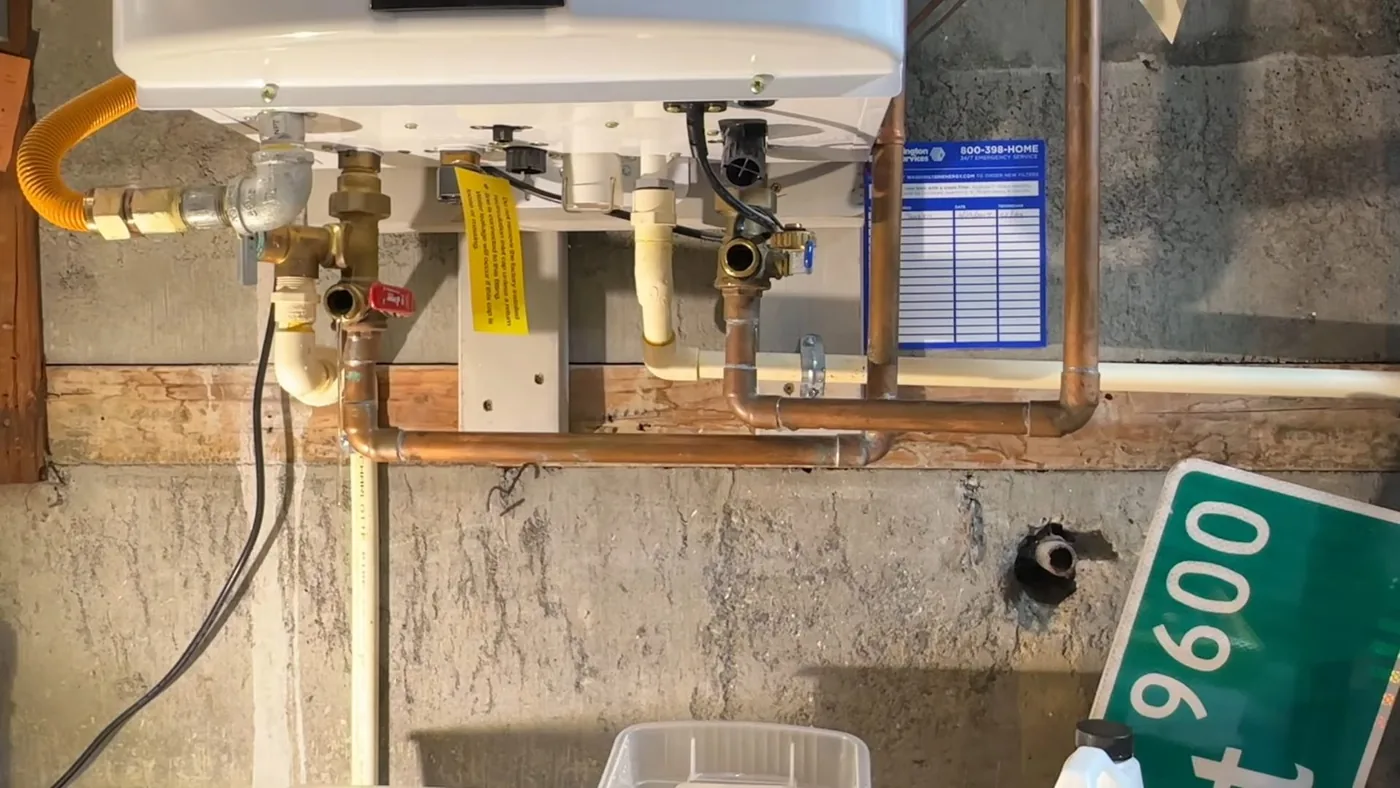
Working on an existing tankless unit
If your tankless unit is already installed and has a problem, start with the display. Most units show an error code that points toward the cause.
- Write down the error code and the model number from the label.
- Check that the gas valve is open or that the breaker is on.
- Note whether the problem is no hot water, lukewarm water or a unit that cycles on and off.
- Tell the plumber when the unit was last flushed. Scale causes a lot of faults.
If you smell gas at any time, leave the building and call the gas utility or 911 from outside.
What to ask for in a tankless quote
- The model, its gas input or electrical demand and its flow at winter water temperature
- Any gas line change, vent work, wiring or condensate drain, listed as separate lines
- Service valves for flushing, and a descaling plan
- The warranty on the unit and on the labor
- Whether a permit applies in Cedar City and who files it
- The removal of the old tank heater and who handles disposal
Which tankless problems cannot wait
Needs a plumber today
- A smell of gas near the unit (leave first)
- Water leaking from the unit or its valves
- A unit that trips the breaker repeatedly
- A unit that shuts down with an error code and no hot water at all
Upkeep and planning
- Lukewarm water that has crept down over months
- A first flush after years of use
- A plan to replace a tank with tankless
- Adding an undersink unit at a far sink
Hard water, gas lines and winter: tankless questions
Does a tankless water heater need descaling in hard water?
Usually yes. Very hard water leaves scale inside the heat exchanger, which cuts flow and efficiency. Ask for service valves so the unit can be flushed, and follow the manufacturer’s schedule. Iron County water is estimated at about 13 grains per gallon, which is very hard.
Will a tankless heater work with my existing gas line?
Maybe not. Whole-house gas units often need more gas than a tank heater, so the pipe, the meter and the vent may all need to be checked. Ask for the unit’s gas input and have the plumber confirm what your line can deliver.
What is an undersink water heater, and when does it make sense?
It is a small unit mounted near one sink that supplies hot water there. It suits a far-off sink where you wait a long time for hot water, but its flow is limited, so it is not a replacement for a main heater.
Do I need a softener if I have a tankless heater?
A softener is not required, but it reduces scale and the upkeep that comes with it. Test your tap water and ask the plumber whether the manufacturer’s warranty has conditions about water hardness.
Heater and water quality pages
Ready to find out if tankless fits?
Call with your fuel type, household size and where the heater would go. You will talk to a plumber, not fill in a form.