
Trenchless repair · Cedar City, Utah
Trenchless pipe lining in Cedar City, UT: when no-dig sewer repair works, when digging is still needed and how to compare
Trenchless repair avoids cutting a long trench through your yard, driveway or landscaping. It is a real option for some damaged pipes and the wrong one for others, and the difference shows up on a camera before it shows up in a quote.
Considering a no-dig repair?
- FIRST
- Get a recorded camera inspection of the line
- ASK
- Which sections are damaged and how far apart
- COMPARE
- Get the lining and the digging quote on the same footage
What trenchless repair is, and the two main methods
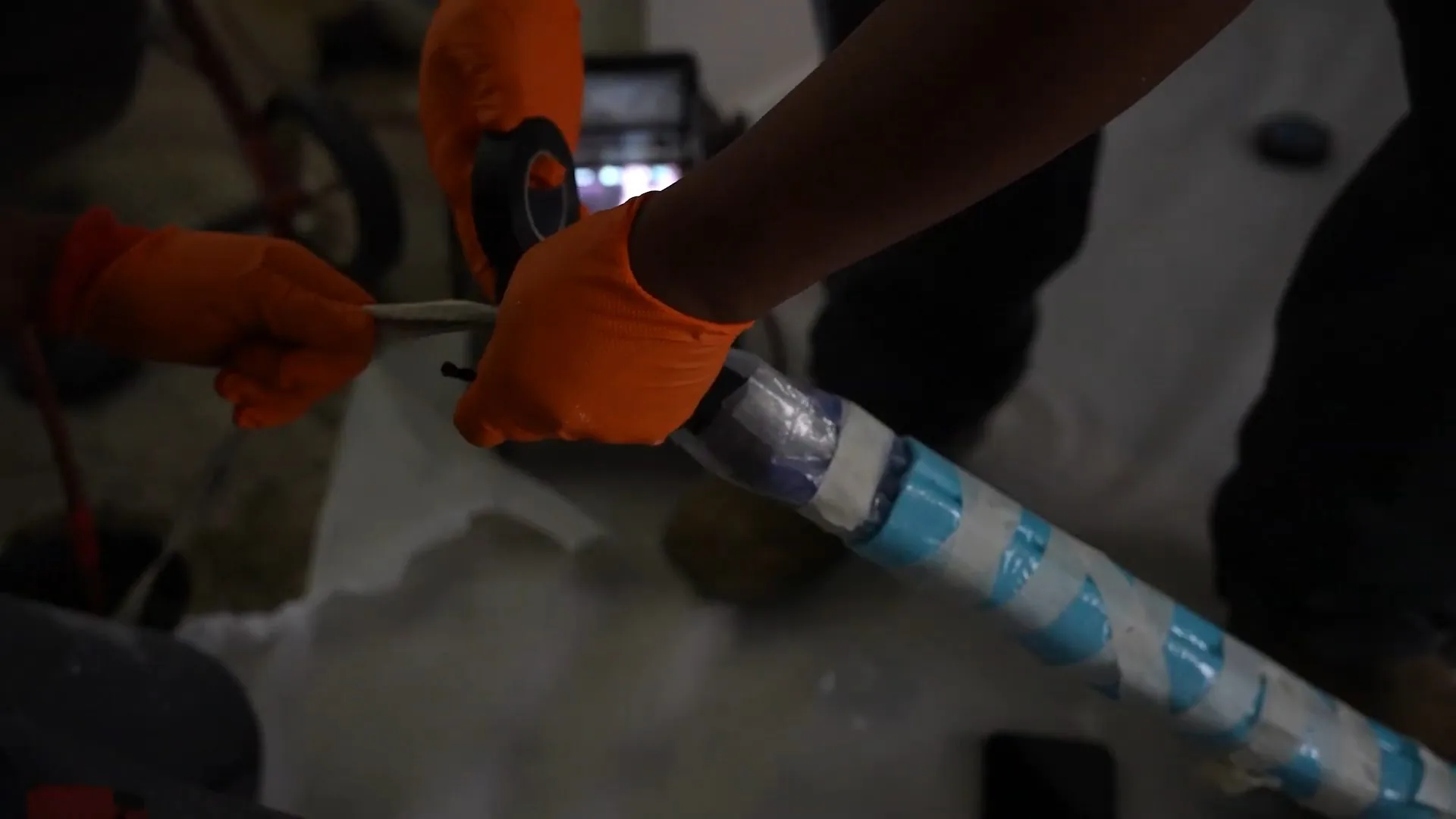
Trenchless means the pipe is repaired or replaced from a few access points instead of along its whole length. Two methods account for most jobs.
| Method | How it works | Needs |
|---|---|---|
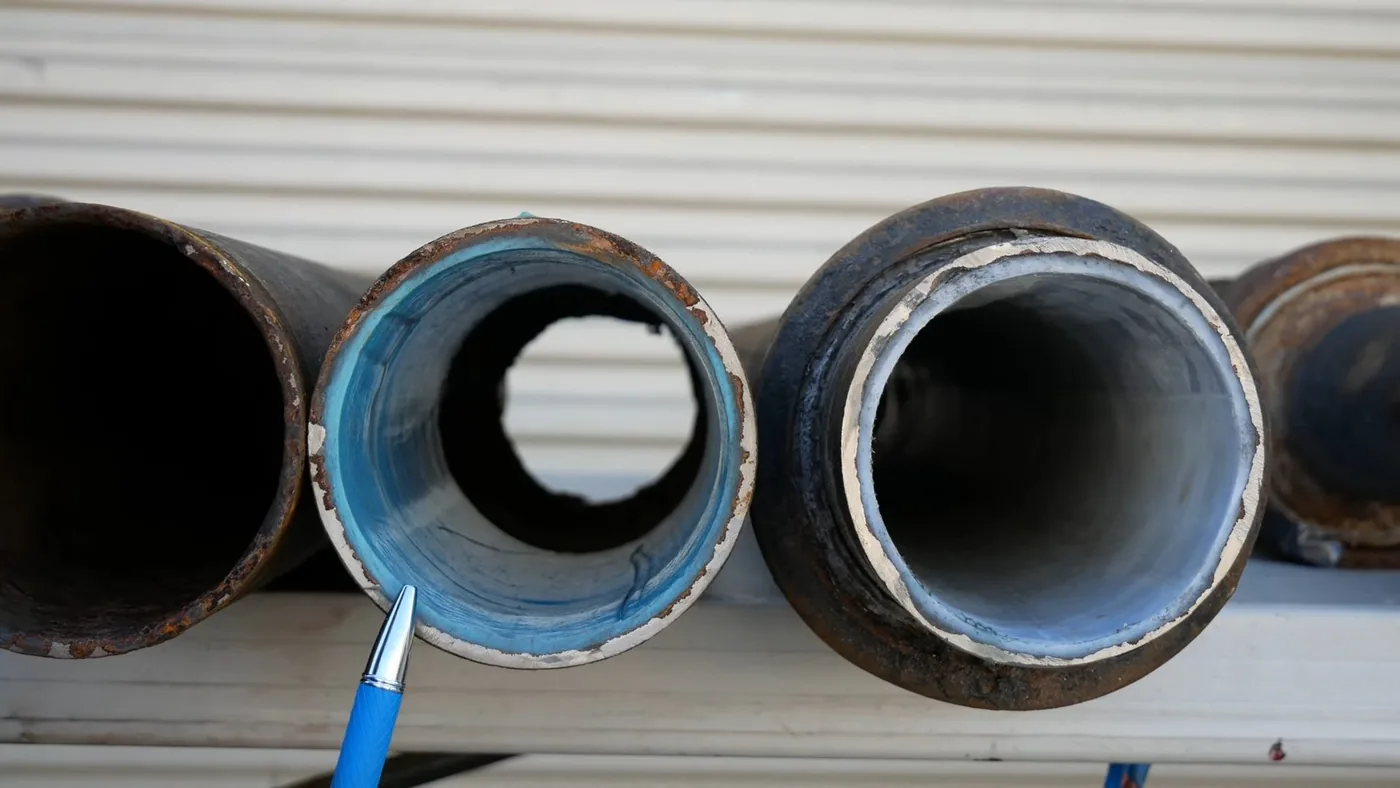
| Cured-in-place lining | A resin-soaked liner is pulled into the old pipe, expanded and hardened to form a new pipe inside it | A continuous pipe path, with the line cleaned first |
| Pipe bursting | A tool breaks the old pipe outward as a new pipe is pulled in behind it | Access pits at each end, and soil that tolerates it |
| Spot lining | A short liner seals one damaged section | A pipe that is otherwise sound |
Both methods start with a camera look and a cleaning of the line. If the line is blocked by roots or buildup, jetting the line often comes first.
Trenchless against open-trench digging: how to compare
| Question | Trenchless | Open trench |
|---|---|---|
| Disturbance to yard and driveway | A few access points | A trench along the pipe |
| Pipe condition it can handle | Damaged but still continuous | Collapsed, offset or missing sections |
| Fixing a belly or sag | Usually not corrected | Can be regraded |
| Branch connections | Must be reopened after lining | Reconnected as part of the work |
| Records | Camera footage before and after | Visual check of the open trench |
Neither is better in every case. The right one depends on what the camera shows, so ask the plumber to explain the choice with the footage in front of you.
When relining is the wrong answer
- The pipe has collapsed or is badly offset, so a liner cannot pass.
- A section has sagged and holds standing water. Lining follows the sag.
- The line is blocked by a solid obstruction that jetting cannot clear.
- The pipe has several steep bends or connections that the liner cannot pass cleanly.
- The pipe is damaged along most of its length and a new pipe would be sounder.
In those cases, ask for the digging quote and for the reason a liner will not work. A plumber who steers every job to one method deserves a second question.
Want to know if your line could be lined?
Call and describe the backups. A plumber can set up a recorded camera inspection and explain what it shows.
Slab-area pipes and the same method
Pipes under a slab can sometimes be reached with the same techniques, rerouted or lined in place, so the floor is not opened. The leak and its location still have to be found first, which is covered on the slab leak page.
Access pits, utility locates and what happens to the yard
Locates before any access pit
Blue Stakes of Utah runs the 811 service, and locate requests can be submitted online at any hour. Blue Stakes’ own phone line runs on weekdays during business hours.
Trenchless work still digs at the access points. Ask who requests the locate and where the pits will be, and ask the plumber to mark them on a sketch or photo before the work starts.
Source: Blue Stakes of Utah, bluestakes.org.
Ask how the pits will be backfilled and what happens to the lawn or paving above them.
How a lining job runs from start to finish
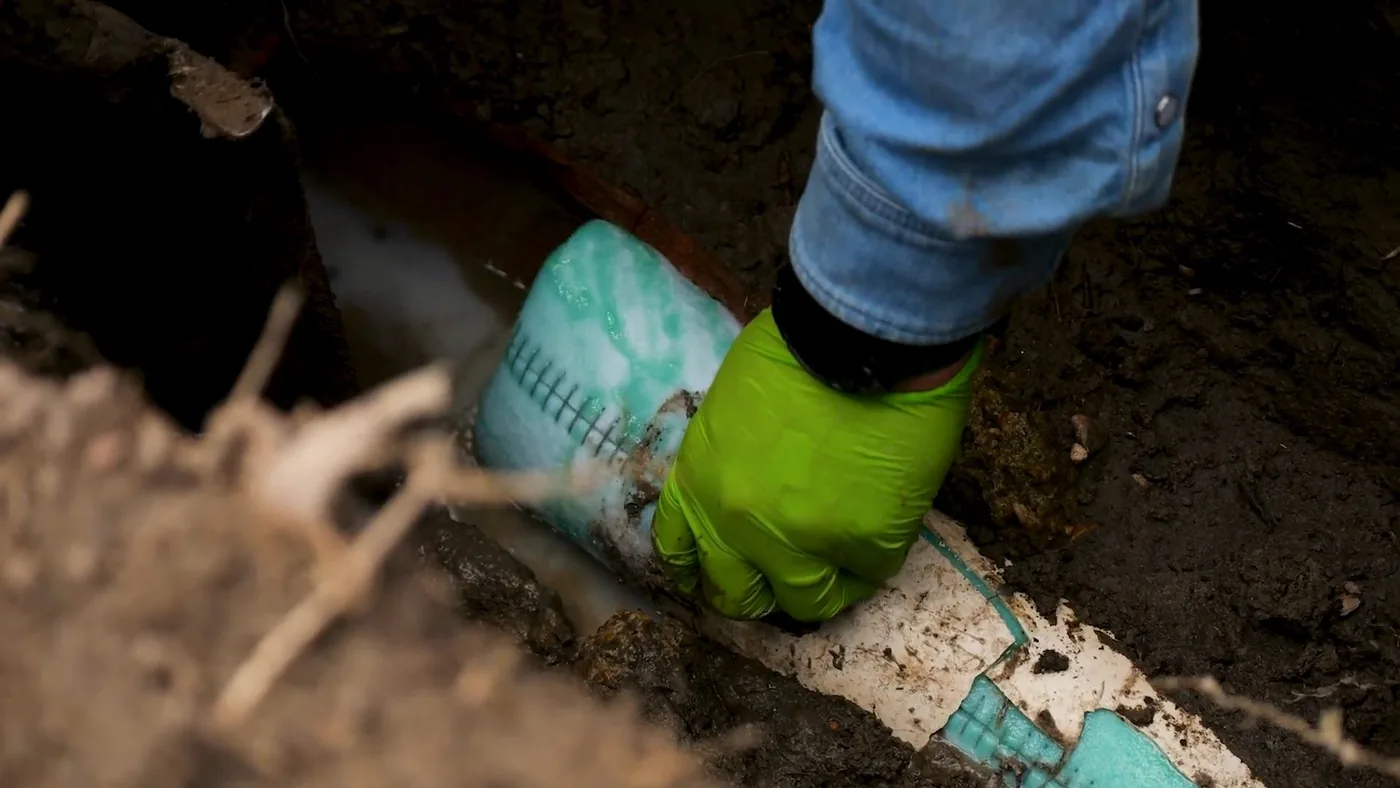
- A camera inspection records the pipe and measures the sections to be lined.
- The line is cleaned so the liner can bond to the pipe wall.
- The liner is prepared, pulled into place and expanded.
- It is cured with steam, hot water or light until it hardens.
- Branch connections are reopened, and a second camera pass records the result.
Ask how long the sewer will be out of service during the cure. Plan the use of water for that day.
Lining quote checklist: footage, liner material and warranty
- The camera footage showing where the damage is and why lining or bursting fits
- The liner or pipe material, its warranty and how a claim is made
- How branch connections are reopened and tested
- A second camera pass after the work, given to you
- Any permit or inspection that applies in Cedar City, and who files it
- The digging quote on the same footage, for comparison
What the camera tells you about older pipe
Older sewer lines were built from several materials, and each fails differently. Clay can crack and let roots in at joints. Cast iron can scale and thin from the inside. Fiber conduit can flatten or delaminate. Which one you have decides whether a liner will bond and how long it is likely to last.
Housing age and pipe material for Cedar City could not be verified for this page, so do not assume either. Ask the plumber to identify the material from the footage and to say how that affects the choice.
Roots, buildup and cleaning before the liner goes in
A liner will not bond to a pipe full of roots or scale. The line has to be cleaned first, usually by cutting or jetting. If roots come back through joints, a liner seals them out and is often chosen for that reason.
- Ask what is being used to clean the line and how the wall is checked afterward.
- Ask whether the roots are entering at joints, which a liner seals, or through a break, which it may not.
- Ask how branch lines from sinks and showers are handled where they meet the main.
What affects the quote, without the numbers
No honest number can be given without a camera look. The length of pipe to be lined, the pipe diameter, the number of access points, the depth of the line, the cleaning needed and whether branch connections must be reopened all move the total. A quote that does not mention them is incomplete.
Ask for the quote to list each of these, and to say what is included if the camera finds something unexpected partway through the job.
Sewer problems that cannot wait for a plan
Pipe problems to call about now
- Sewage coming up from a drain, tub or toilet
- A wet or sunken patch of yard over the line
- Every drain slow at once
- A strong sewer smell indoors that will not clear
Options to weigh at leisure
- A line with a history of roots that is clear now
- Aging pipe with no symptoms yet
- A camera look before you buy a house
- Landscaping or paving planned over the line
Trenchless repair questions
When is trenchless pipe lining an option instead of digging up a sewer line?
It can work when the pipe is damaged but still has a continuous path and the access points are usable. A collapsed, badly offset or sagging pipe may still need digging. Ask the plumber to show the camera footage and explain why one method fits.
Does trenchless repair mean no digging at all?
No. It avoids a long trench, but crews still dig access points at the ends of the repair, and sometimes at a cleanout. Ask where they will be and how the surface will be restored.
Will a liner fix a pipe that is sagging?
Usually not. A liner follows the shape of the old pipe, so a low spot that holds water tends to remain. Ask the plumber how a sag would be handled.
How do I compare a lining quote with a digging quote?
Ask both quotes to use the same recorded camera footage. Compare what each method fixes, what it leaves, the warranty and how the yard is restored, not just the total.
Sewer, drain and slab pages
Ready to find out if relining fits your line?
Call and describe the backups. You will talk to a plumber, not fill in a form.