
Leak detection · Cedar City, Utah
Water leak detection in Cedar City, UT: find the leak behind the high bill, the stain or the running meter
A bill that climbs for no reason, a stain that keeps coming back, or a meter that turns with every tap off all point the same way. Start with a check you can do at home, then call with what you found.
Suspect a leak?
- IF WATER IS SPRAYING
- Shut off the main water valve
- READ THE METER
- Write the number down with everything off
- KEEP IT DRY
- Move belongings off wet floors, then call
Is it a leak, or just a high bill?
Most hidden leaks show up first as a number, not a puddle. The bill runs higher than the same month last year, and nobody changed how they use water. Sometimes the first sign is a sound, a smell or a stain that spreads slowly.
- A bill that climbs for two or more months with no change in household use
- The sound of running water when every fixture is off
- A damp, musty smell in a closet, cabinet or crawl space
- A stain, bubbling paint or a soft spot that returns after it dries
- Pressure that dropped suddenly at one fixture or across the whole house
- A patch of yard that stays wet, or greener than the rest
None of these proves a leak. A houseguest who stays a month, a new sprinkler schedule or a running toilet can raise the same bill. The meter test below separates a real leak from a change in use.
Check the places you can see first: under every sink, around each toilet base, at the heater and at outdoor hose connections. A small leak caught at this stage is usually a small repair. One left running keeps soaking whatever is around it, and that is how a drip becomes a stained ceiling, rotted cabinet floor or warped flooring.
Run the meter test before you call anyone
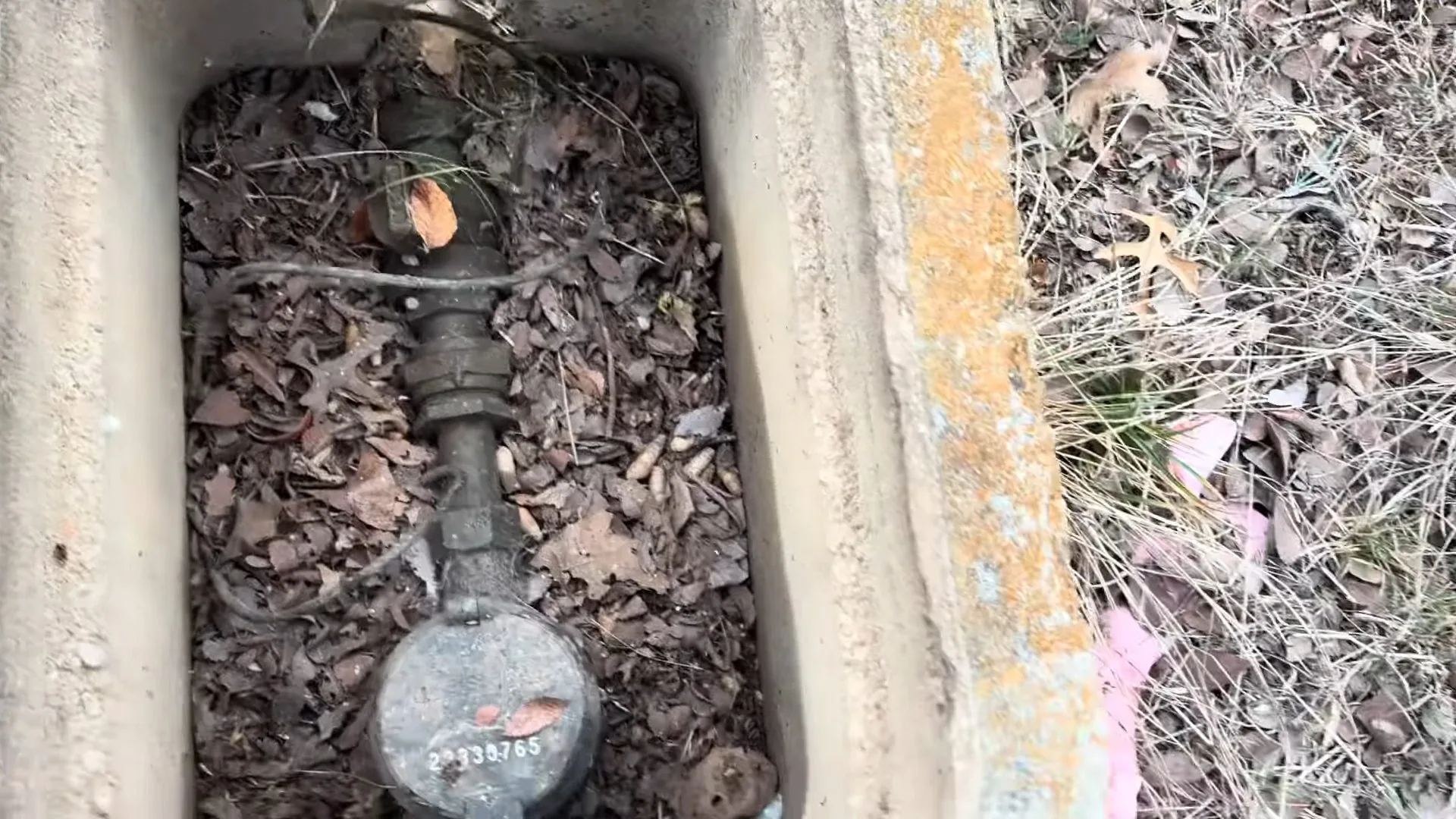
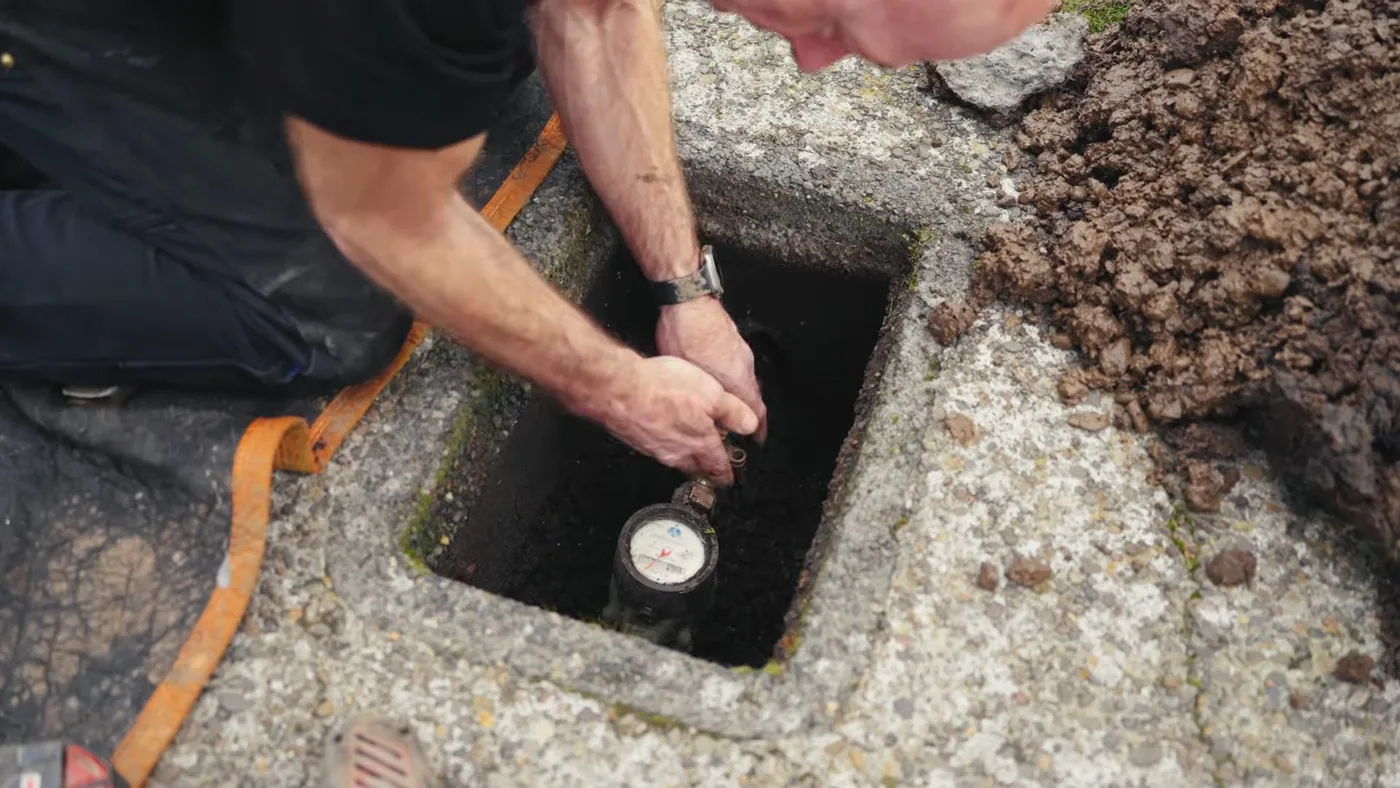
Your water meter is the one gauge that does not depend on a guess. It sits in a box near the curb or the edge of the property, under a lid. When every fixture is off, the reading should stand still.
- Turn off every tap, appliance and sprinkler zone. Pause the ice maker and any softener cycle too.
- Lift the meter lid carefully and read the number. Take a photo so you can compare it later.
- Look for the small low-flow indicator, a dial or triangle, if your meter has one. If it keeps turning, water is moving through.
- Wait at least thirty minutes without using any water, then read the meter again.
- If the number changed or the indicator is still turning, water is leaking somewhere after the meter.
What the meter test cannot tell you
A moving meter confirms a leak on your side of the meter. It does not say where the water is going. It also misses leaks too small to move the dial in half an hour.
If the meter stands still but a stain keeps returning, call anyway. Describe the stain and when it grows, because the timing often points to the source.
Cedar City will not find this leak for you
What the city’s own water plan says
Cedar City’s 2024 water conservation plan states that the city does not currently have an active leak detection program. Customer meters are read monthly, and the city replaces a meter when it stops working, with no set calibration schedule.
A leak on your side of the meter keeps running until you notice it. Your monthly bill and your own meter check are the early warning, so compare the last three or four bills and keep the meter photo.
Source: Cedar City Water Conservation Plan, 2024, pages 12 to 15.
If water is pooling inside the meter box or at the curb, tell the city’s water department as well. That part of the system may not be yours to repair.
Meter still moving?
Call and describe what the meter did. You will get a plain answer on what to shut off and what to look at next.
Where the water is probably going
The symptom narrows the search before anyone opens a wall. Use the table to match what you see with the likeliest source and one safe check.
| What you notice | Likely source | Safe next check |
|---|---|---|
| Meter moves, no water in sight | The line from the meter to the house, or a pipe inside a wall or under the floor | Shut off the main valve inside the house. If the meter stops, the leak is inside. If it keeps moving, it is in the line before the valve. |
| Toilet fills now and then on its own | Worn flapper or fill valve | Add food coloring to the tank and wait fifteen minutes without flushing. Color in the bowl means a leak. See fixing a running toilet. |
| Hot water runs out fast and the bill is up | A leak on the hot side or a failing heater | Look for dampness at the base of the heater and on the pipes above it. |
| A wet patch in the yard | A sprinkler line or the line from the meter | Turn off the sprinklers at the controller, then check the meter again. |
| A stain on a ceiling below a bathroom | A drain, supply line or shower pan above it | Note when it grows. After showers points to the drain or pan. Constant growth points to a supply line. |
| A stain on a top-floor ceiling | The roof, a vent flashing or melting snow | Note whether it appears after rain or snow. A roofer owns that leak, not a plumber. |
| A damp patch where a basement or crawl-space wall meets the floor | A gutter or downspout dumping near the foundation, poor grading or a plumbing line | Check whether it appears after rain or melt. Water that appears in dry weather points toward a pipe. |
What to ask for when a plumber pinpoints the leak
Finding a leak is a different job from pipe leak repair. Before any work starts, ask what you will have in hand when the search ends.
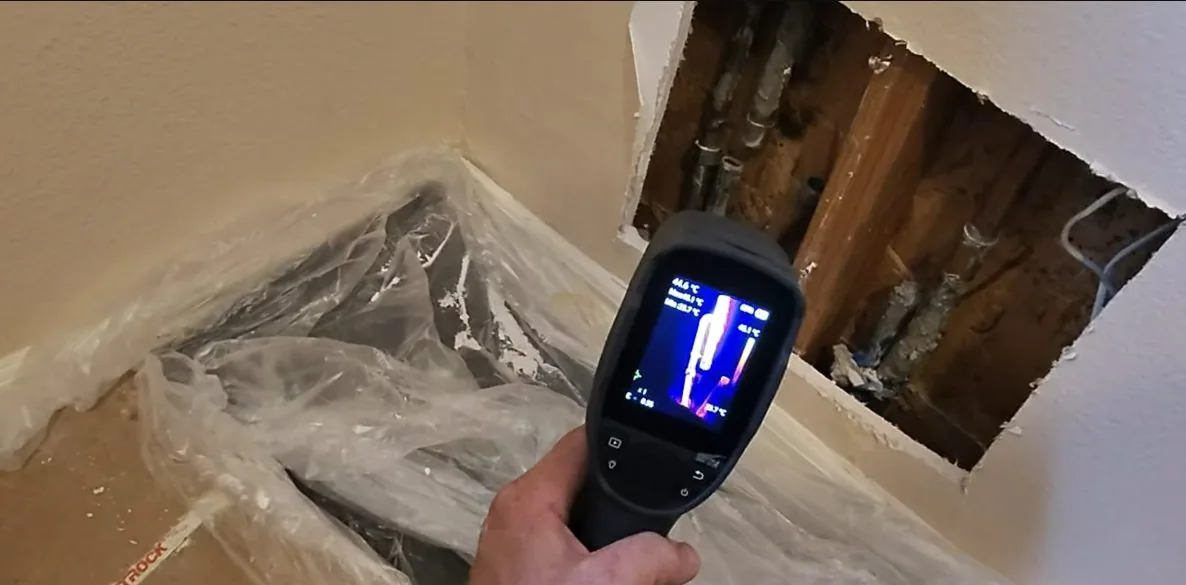
Plumbers locate hidden leaks with methods such as acoustic listening, thermal imaging and pressure testing. You do not need to judge the equipment. Ask which method confirmed the leak and what it showed.
- The exact location, marked or photographed, and what must be opened to reach it
- How the leak was confirmed, so the answer rests on more than one clue
- What was ruled out, such as the toilets, the heater and the sprinklers
- Repair options in plain terms, including what each one disturbs: walls, floors or landscaping
- A quote for the repair, given before anything is opened
Keep those notes. They help with an insurance claim, and they help the next plumber if the leak ever returns.
When the same line keeps leaking
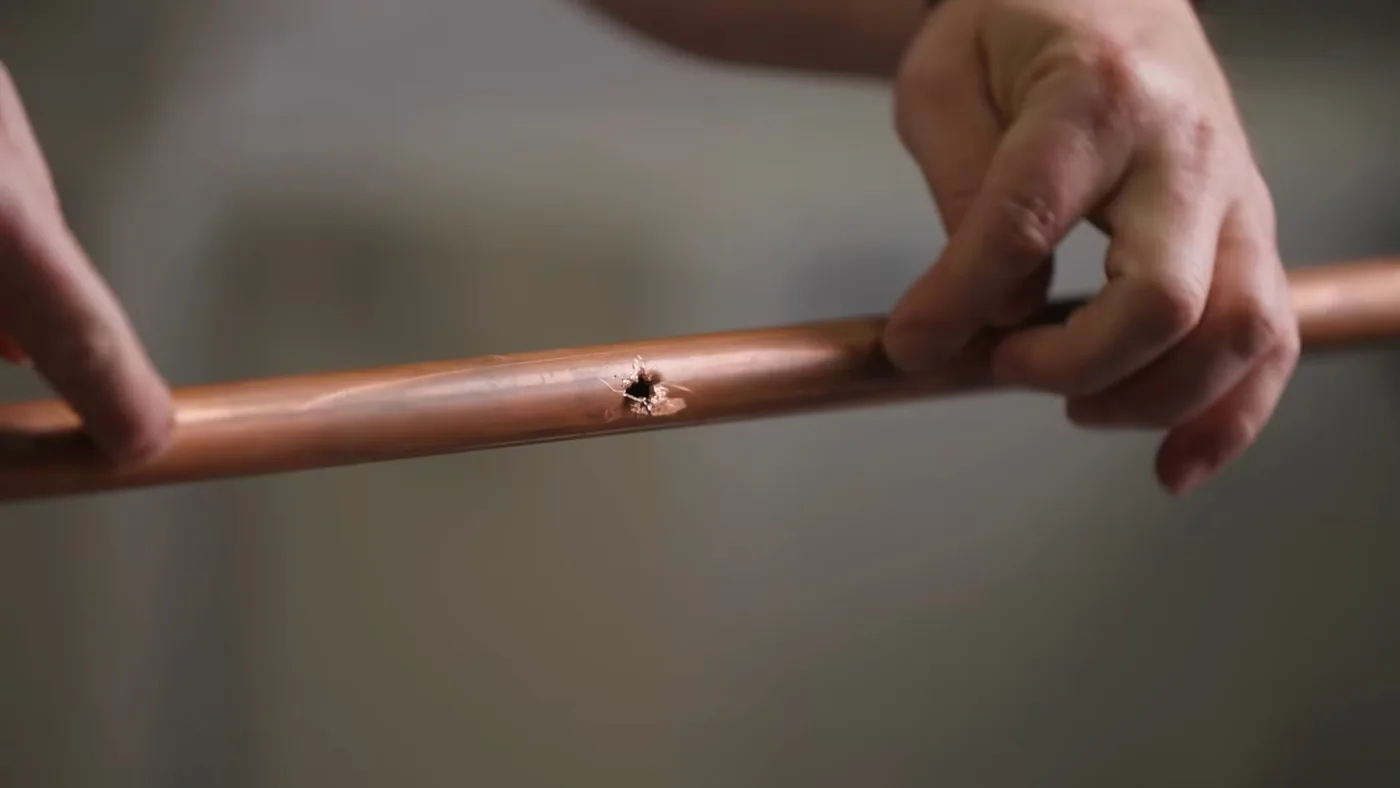
One pinhole in a copper line is a repair. A second and a third in the same stretch of pipe is a pattern. Ask the plumber whether the pipe itself is wearing out and what the options are for replacing the failing line rather than patching it again.
That conversation is worth having before you pay for a fourth repair. It also tells you whether the problem is one run of pipe or the whole house.
Sprinkler lines, ceilings and roofs: who owns which leak
Not every leak is a plumbing leak, and an honest plumber will say so. A roof leak belongs to a roofer. A leak at a shared wall in a townhome or condo may involve the HOA. A break in the city’s main or at its meter box is the city’s to fix.
Outdoor lines have their own timing. The city’s 2024 plan cites an ordinance that bars outdoor watering from 8:00 AM to 6:00 PM between April 1 and October 31. Confirm the current rule with the city, and plan any sprinkler leak test around those hours.
Pools and spas can hide a leak behind routine top-ups. If you fill yours often, turn the auto-fill off before the meter test, or the meter will move for a reason that is not a leak.
A gas leak is not a water leak. If you smell gas, leave the building and call the gas utility or 911 from outside.
If water has already soaked floors or drywall, drying and cleanup is a separate call, because wet materials need drying as well as a repair.
How urgent is this leak?
Treat as urgent
- Water is spraying, pooling or coming through a ceiling
- The meter is still turning with the main valve closed
- A sudden loss of pressure together with a wet spot in the yard
- Water is standing near the electrical panel or outlets
Safe to schedule
- A stain that has not changed in weeks
- One dripping faucet
- A slightly higher bill in a month of heavy watering
- A damp smell with no moisture you can find
If water has reached the electrical panel or outlets, stay away from it and call 911 if anything sparks or smells burnt. Shut off the main water valve first only if you can reach it dry.
Common questions about bills, meters and hidden leaks
My water bill jumped and I cannot see a leak. How do I check the meter?
Turn off every fixture, read the meter, wait thirty minutes without using water, then read it again. A changed number, or a low-flow indicator that keeps turning, means water is leaking after the meter. The test does not show where, so describe the result when you call and ask the plumber to pinpoint the source before quoting a repair.
How do I tell whether the leak is inside the house or in the line from the meter?
Shut off the main valve inside the house, then check the meter again after a few minutes. If it stops, the leak is on the house side of that valve. If it keeps moving, the leak is in the line between the meter and the house. Either result helps narrow the search.
Can a leak raise my bill if I never see any water?
Yes. Leaks inside walls, under floors, in the yard or in the line to the house can run for weeks without showing up. That is why the meter reading matters more than what you can see, and why a stable reading with everything off is the first thing to confirm.
What should I do if water is pooling in the meter box or at the curb?
Shut off the main inside your house and see whether the pooling slows or stops. If it does not, or if the water appears to come from the city side of the meter, tell the Cedar City water department. Call a plumber for any leak that continues on your side after the main is off.
Where a leak search usually leads next
Water going somewhere it should not?
Call and describe the bill, the meter and the stain. You will talk to a plumber, not fill in a form.